Building cleaning is an indispensable profession that ensures cleanliness, hygiene, and order in residential and work environments. However, this activity also carries several often underestimated risks: from chemical irritations to physical injuries due to incorrect movements. Therefore, occupational safety is a top priority to prevent accidents and protect the health of cleaning staff. In this article, we present the seven most important rules for occupational safety in building cleaning.
1. Wear Protective Clothing – The Right Equipment Makes All the Difference
Protective clothing is the first step towards greater safety. Depending on the task and location, the following equipment should be used:
- Gloves: To protect against chemicals, sharp surfaces, and contamination. Especially when working with disinfectants, acid- and alkali-resistant gloves are mandatory.
- Safety Shoes: These protect feet from injuries caused by falling objects or slippery floors. Non-slip soles are indispensable in wet areas.
- Respiratory Masks: Especially when cleaning heavily dusty or chemically contaminated rooms, respiratory masks protect against harmful substances.
- Safety Goggles: When handling spray cleaners or other chemicals, safety goggles protect the eyes from dangerous splashes.
Regular inspection of protective clothing for damage is equally important to ensure full functionality.
2. Correct Lifting and Carrying of Heavy Loads
Cleaning staff often have to carry heavy equipment, buckets, or trash bags. This often leads to back problems and muscle tension due to incorrect lifting techniques. The most important tips for ergonomic lifting:
- Lift with your legs: Always bend your knees and keep your back straight, instead of lifting with your back.
- Distribute weight: Distribute loads evenly between both hands or shoulders to avoid one-sided strain.
- Use aids: Where possible, transport aids such as trolleys or roll containers should be used to reduce physical strain.
Regular ergonomics training is a valuable investment in employee health.
3. Caution when handling chemicals
Cleaning agents are often highly concentrated and can harm skin, eyes, and respiratory tracts if misused. Always observe the following measures:
- Read hazard labels: Cleaning staff must know and observe the safety data sheets and labels of the products.
- Correct dosage: Chemicals must never be overdosed. Many modern dosing systems facilitate precise handling.
- Observe mixing restrictions: Certain cleaning agents must never be combined, as they can release dangerous fumes (e.g., acids and chlorine).
- Ensure ventilation: Especially when using strong chemicals or disinfectants, the room should be well-ventilated.
4. Minimize slip hazards
Slippery and wet conditions are among the most common causes of accidents in building cleaning. Therefore, caution is advised, especially on smooth floors such as tiles, laminate, or marble. Safety measures include:
- Put up warning signs: When floors are being cleaned, warning signs ("Caution, slippery!") must be prominently displayed.
- Use appropriate cleaning agents: Products that leave too much residue can contribute to slippery surfaces.
- Wear non-slip shoes: Especially in wet areas, non-slip soles are essential.
5. Use ladders and step stools safely
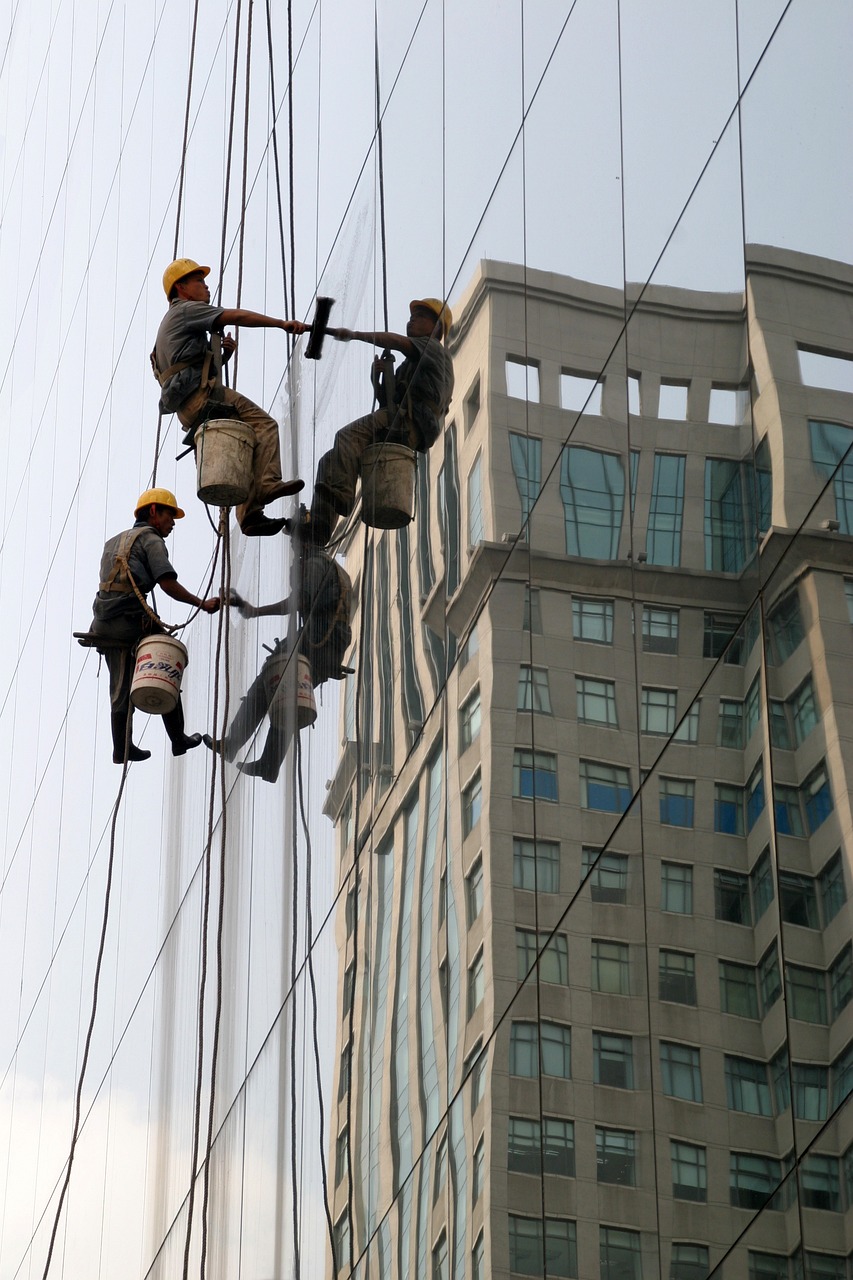
Working at heights, e.g., during window or facade cleaning, requires particular care:
- Use sturdy ladders: Ladders must be regularly checked for damage. Only tested and sturdy models should be used.
- Set up safely: The ladder should be placed on a level surface, and the top three rungs must not be stepped on.
- Additional safety measures: When working at great heights, the use of safety harnesses is mandatory.
6. Operate machines and equipment correctly
Cleaning equipment such as wet-dry vacuums, high-pressure cleaners, or scrubber-driers significantly ease the work, but also pose a risk if not used properly:
- Ensure proper training: Employees should receive thorough training before using machines.
- Regular maintenance: Equipment must be regularly maintained and checked for defects to prevent accidents.
- Cable management: Tripping hazards from cables should be avoided by using cable holders or cordless devices.
7. Regular training and instruction
Occupational safety is not just a one-time measure, but a continuous process. Companies should offer regular training to inform employees about current safety regulations and risks. Topics could include:
- First aid at the workplace.
- Hazard analysis at new work sites.
- Emergency procedures, e.g., in case of a chemical accident.
Active communication about safety promotes awareness and helps prevent accidents.
Conclusion: Safety is a team effort
Workplace safety in building cleaning requires commitment from both employees and employers. With the right protective clothing, safe working methods, and regular training, risks can be effectively minimized. Ultimately, workplace safety pays off not only in a healthier workforce but also in higher work quality and efficiency. Invest in safety – for a healthy and productive work environment!